


River Institute Opens New Environmental DNA Laboratory
May 28, 2026Cornwall Ontario – On a lovely spring evening along the banks of the St. Lawrence River, the River Institute celebrated the official opening of its new environmental DNA laboratory.
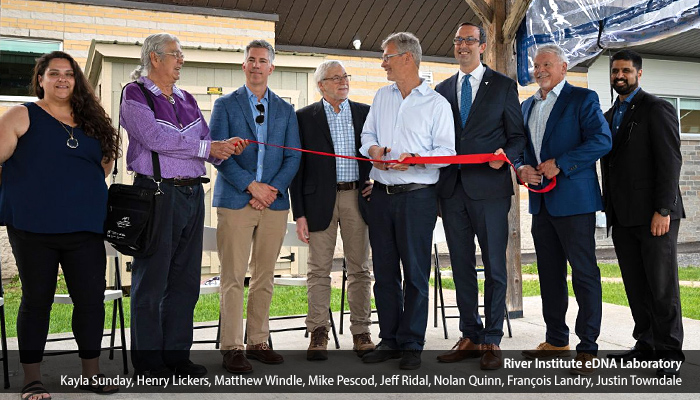
The independent, non-governmental River Institute—based in Cornwall and located on the campus of St. Lawrence College—will use the new laboratory to expand access to environmental DNA (eDNA) technologies that are transforming biodiversity monitoring. By analyzing genetic material shed by organisms into the environment, eDNA offers a highly sensitive and efficient method for monitoring ecosystem health.
The new laboratory is the cornerstone of a major capital expansion project supported by the Canada Foundation for Innovation, Ontario Research Fund, and private donors. It contributes to the establishment of the Environmental and Climate Change Observatory of Ontario (ECCO-Ontario), a new research partnership that includes Queen’s University, the River Institute, and the Mohawk Council of Akwesasne Environment Program, among other institutions. The facilities will significantly expand the River Institute’s research and training capacity, empowering scientists to use cutting-edge genetic techniques to study biodiversity, track invasive species, and address urgent environmental challenges related to climate change and habitat loss.
“This investment underscores the growing recognition of the River Institute as a unique freshwater science research institute with a national profile,” said Dr. Jeff Ridal, River Institute Executive Director. “We are building on that momentum to deepen our impact through innovative research, collaboration, and knowledge sharing.”
A number of dignitaries were on hand to deliver congratulatory comments:
“Now more than ever, is it critical that Ontario builds a robust research ecosystem that keeps us at the forefront of innovation. Our government is proud to support the River Institute’s new Environmental DNA Lab which will ensure more researchers have the cutting-edge tools and modernized spaces they need to drive groundbreaking environmental discoveries that keep our communities healthy and thriving.” – Nolan Quinn, Minister of Colleges, Universities, Research Excellence and Security.
“What eDNA methods can tell us about the environment is incredible. I’m excited to see this project, and the years of collaboration and work that has gone into it, come to fruition. I hope that we can continue to use this new technology to fight for environmental justice and maintain one of the best freshwater fisheries that we have here in North America.” – Kayla Sunday, Environmental Services Manager, Mohawk Council of Akwesasne
“The opening of the eDNA laboratory is a milestone for our community. We are very fortunate to have this internationally recognized, leading scientific organization right here in our backyard, with all of the opportunities it provides. The City of Cornwall has been a proud partner of the River Institute for many years, and I look forward to continuing to grow that partnership in the years to come.”– Justin Towndale, Mayor, City of Cornwall
“The opening of this new environmental DNA laboratory is an exciting step forward for our region. The River Institute continues to demonstrate leadership in environmental science and innovation, and this investment strengthens our ability to protect our natural resources, support research, and create meaningful opportunities for our communities and future generations. We are proud to support this important work and to see Eastern Ontario positioned at the forefront of cutting-edge environmental monitoring.” – François Landry, SDG Counties Warden
Photo credit: Anthony Wallace
About the River Institute
The St Lawrence River Institute of Environmental Sciences (River Institute) is a not-for-profit, charitable organization established in partnership with the Mohawks of Akwesasne and other community and local government partners to address Great Lakes and St. Lawrence River ecosystem concerns through research, education, and community outreach.\
- Website: riverinstitute.ca
Categorised in: Business, Community, Environment, General, News